

The Auckland to Hamilton move has a way of surprising people – not because the route is difficult, but because it looks easy.
That assumption is where most of the stress comes from. Underestimated loads, last-minute packing scrambles, tricky property access, and tight handover windows are not problems created by distance. They happen regardless.
Knowing what actually shapes this kind of move makes it far easier to get ahead of the parts that tend to go wrong.
Why People Are Moving from Auckland to Hamilton
Hamilton has been pulling people out of Auckland for a while now, and it’s not hard to see why. Housing costs, the pace of daily life, more space for families – the reasons vary, but the pull is real. Property prices in Hamilton are significantly more forgiving, the commute to anywhere in the city rarely tests your patience, and it has grown into a place with good schools, a genuinely solid food and café culture, and the kind of neighbourhoods where kids still play outside.
It sits close enough to Auckland that ties don’t have to be cut, but far enough that the daily grind feels like a different life entirely. What doesn’t change once the decision is made is the actual work of getting there. Booking a truck, coordinating access, protecting your belongings in transit – none of that gets simpler just because the destination feels like a fresh start. The motivation for moving is personal. The logistics, unfortunately, are not.
Distance, Travel Time and Logistics
Because the trip is relatively short, people sometimes assume the move can be handled with very little planning. In reality, even an Auckland to Hamilton relocation needs proper scheduling. Pickup times, traffic flow, building access, and unloading arrangements all affect how smooth the day feels. This is where broader moving within New Zealand becomes relevant, because domestic moves still rely on route planning, timing control, and safe handling rather than distance alone.
Crown’s domestic moving page also makes clear that nationwide furniture moving involves coordinated planning for travel routes, delivery windows, and handling requirements.
Planning Your Move: Key Steps to Consider
Good planning usually starts with timing. Confirming move-out and move-in dates early helps narrow down transport options and avoid unnecessary holding periods.
It also helps to think through access at both ends, especially if either property has stairs, limited parking, or narrow entry points. In that context, relocation planning is less about paperwork and more about reducing avoidable friction before moving day.
Understanding Moving Costs and Factors
The biggest mistake people make with the moving costs from Auckland to Hamilton is assuming the quote is based on distance alone. Cost is more often shaped by how much is being moved, how easy the properties are to access, whether packing help is needed, and whether the transport is shared or dedicated. Long-distance guidance also highlights shipment size, access conditions, packing needs, transport type, and scheduling flexibility as common cost drivers on domestic moves.
Packing and Transport Options
Packing matters even on a shorter intercity route. Items still need to be loaded, secured, transported, and unloaded without damage.
For some households, self-packing is manageable. For others, especially where there are fragile items, larger volumes, or tighter timing, professional help makes more sense. That is often where furniture movers and broader household relocation support become more useful than they first appear.
Timing Your Move for Efficiency
The best move date is usually the one that gives you room to breathe. Mid-week bookings and off-peak periods often offer more flexibility than weekends or end-of-month rush periods.
The route itself may be shorter than many examples of long-distance moving, but timing still affects truck availability, labour coordination, and how much pressure ends up falling on the move day itself.
Crown’s long-distance page emphasises structured move management, clear communication, and route coordination as part of making domestic relocations run more smoothly.
Common Challenges and How to Avoid Them
The main problems on this route are usually not dramatic. They are the smaller issues that build up when nobody has planned properly: underestimated load size, poor packing, tight access, delayed keys, or unrealistic timing. That is why moving logistics matters even on a move that looks simple on paper. A shorter distance reduces travel time, but it does not remove the need for organised loading, careful transport, and a workable handover plan.
Benefits of Using Professional Movers
Professional support makes the biggest difference when the stakes are higher – a larger home, fragile items, tricky access, or a handover window that doesn’t leave room for error. That’s where the day either holds together or doesn’t.
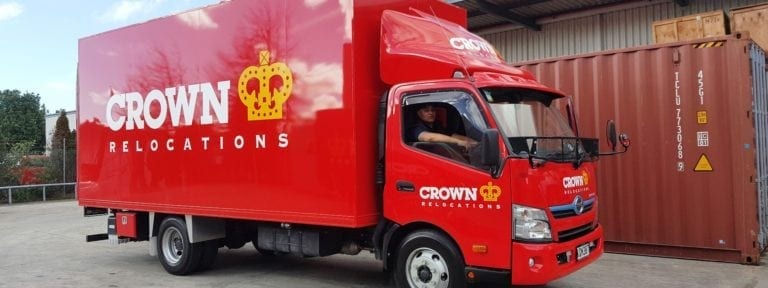
Crown Relocations NZ builds its domestic services around exactly that: coordinated planning, secure handling, and route-specific support that turns a potentially chaotic moving day into something manageable.
The Auckland to Hamilton route may be short, but it still rewards proper planning. The households that find it easiest are the ones that stopped guessing and got advice that matched the actual shape of their move.
Frequently Asked Questions
It is roughly 120 to 125 km, and the drive is commonly around 1.5 to 2 hours depending on traffic, road conditions, and the exact addresses involved.
Cost usually depends more on volume, access, packing needs, and transport setup than the route length by itself. Shared and dedicated transport can also affect pricing.
It sits in the intercity category rather than a simple local move. Even though it is shorter than many domestic routes, it still needs proper scheduling, loading coordination, and transport planning.
Mid-week and off-peak periods are often easier to schedule and may offer more flexibility than weekends or busier moving dates. Availability can also vary depending on the season and overall demand.
Not every move requires full-service support, but professional movers can be particularly useful for larger households, fragile items, tighter handover windows, or properties with more difficult access.