
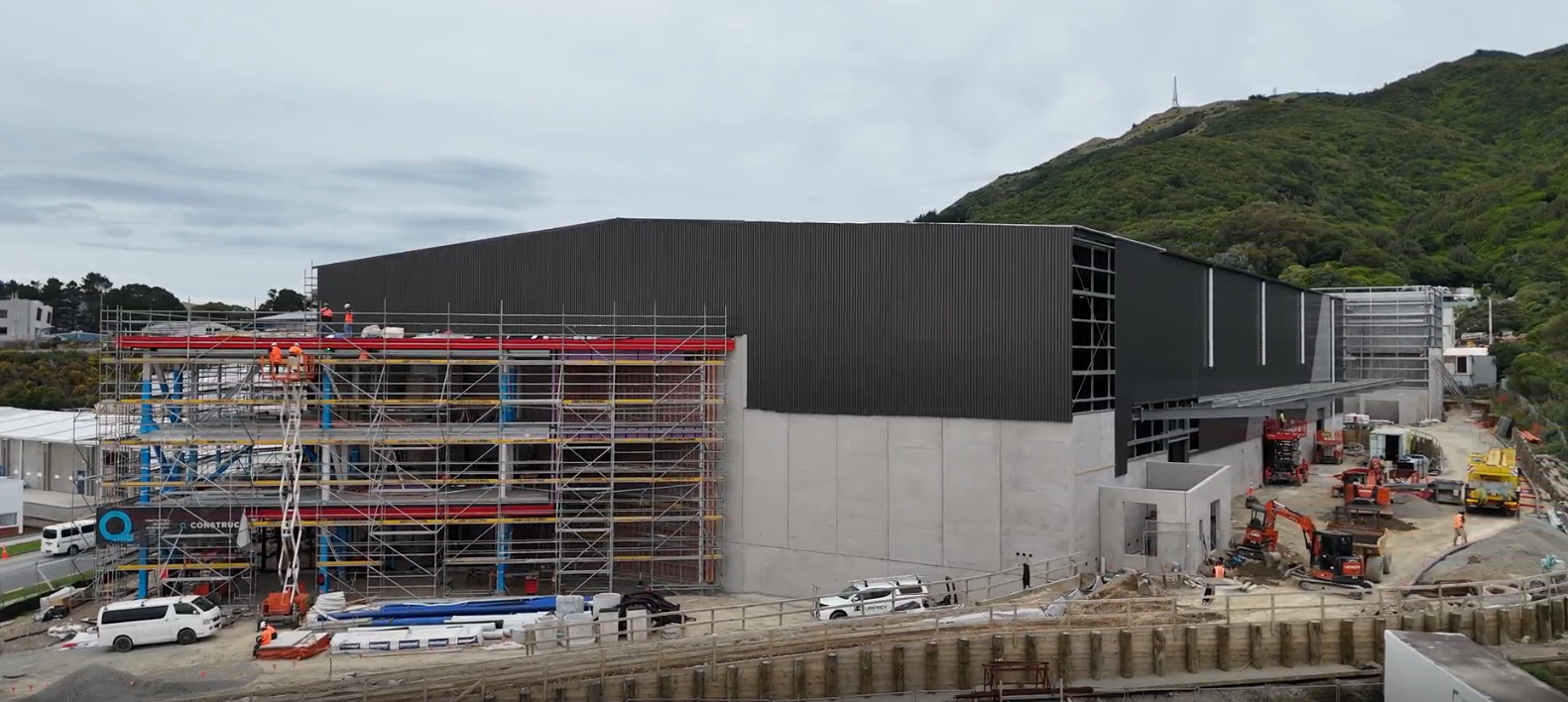
What are your top priorities when choosing offsite storage for important business documents or personal belongings? Along with cost, most people want confidence that their items will be kept secure and protected while being stored over time.
At Crown Worldwide Group NZ, we know that protecting your items is paramount. This has shaped every stage of our new warehouse facility being built in Porirua. So before a single wall went up, even before the site was cleared, safety decisions for Crown’s new warehouse were being made right from the beginning.
Designing Long-Term Protection for Safer Storage
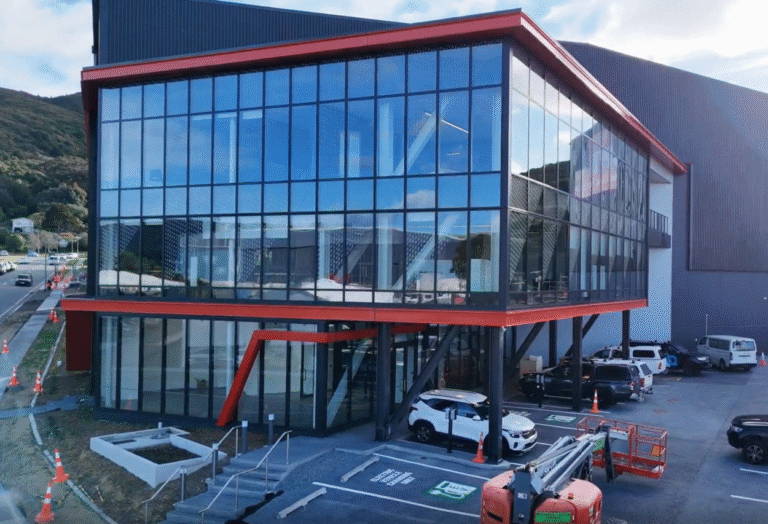
When designing Crown’s new warehouse and offices, Ashton Mitchell Architects focused on safety throughout, taking into account factors such as the site ground and layout, planned use of the site and building, and ensuring protection from natural hazards.
Site design challenges included an initial site slope of 13 meters, equal to a four storey building, along with strong winds across the site and a stream at the rear of the property. Along with designing “the most efficient warehouse volumes we could achieve on the site that worked with the 13-meter cross fall,” Ashton Mitchell ensured loading areas were sheltered from Wellington’s prevailing winds, safekeeping goods being loaded or unloaded. Another safety consideration was making sure staff and visitor parking is provided in a zone completely separated from Crown’s truck access and loading areas.
Design elements also included mitigating natural hazards, such as heavy rains and earthquakes. When designing the building levels and yard surfaces, Ashton Mitchell took into consideration the natural routes the rainwater takes across the ground of the site. This ensures that in heavy rains, any water that overwhelms the storm water drainage system will flow safely around, and not into the building, keeping everything stored inside safe and dry.
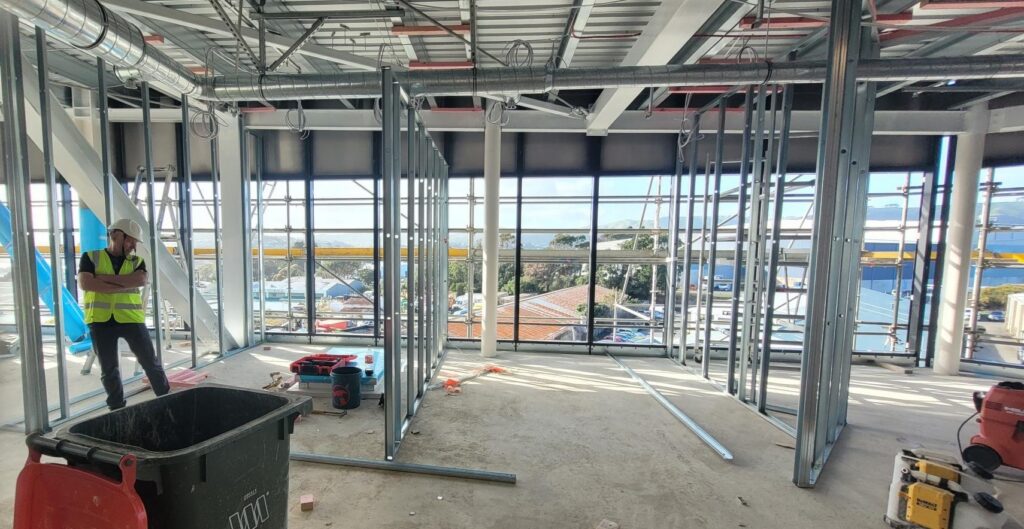
Choosing a Higher Building Standard
Keeping business documents and valued personal belongings safe in an earthquake is an important feature of Crown’s new warehouse. Leon Hulme, Managing Director NZ, decided to go with a higher building standard. Leon explains, “Buildings designed to IL3 standards are engineered for higher resilience than standard residential or commercial buildings which are typically IL2.”
What does this mean for you and your stored items practically?
- Greater protection during major events: IL3 buildings are designed to withstand higher winds and stronger earthquakes than a standard commercial warehouse. This helps ensure the safety of staff and visitors in Crown’s new building, as well as reducing the risk of damage to your stored belongings and business records.
- Reduced disruption after an emergency: an IL3 rated building is less likely to suffer debilitating damage after a major event. This can allow faster recovery and resuming of operations, helping you regain access to your stored items sooner.
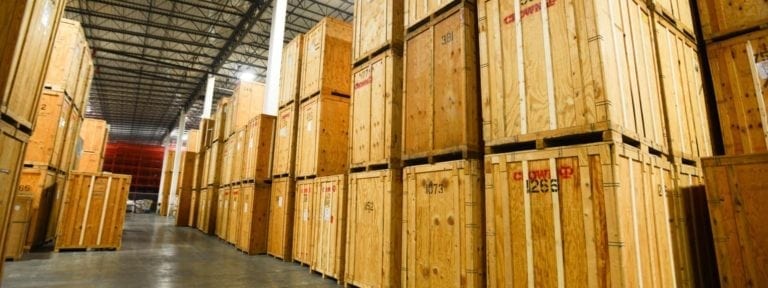
- Better long-term security for stored items: the additional resilience of Crown’s warehouse supports safer long-term storage for household belongings, business documents and valuable personal items.
- Protecting irreplaceable items: when storing sentimental belongings, antiques, important records, or valuable assets, you can have greater confidence that your items are being stored in a purpose-built environment designed to protect what’s valuable to you.
Leon Hulme, Managing Director of Crown Worldwide NZ, is delighted to announce our Crown Warehouse has achieved a 4 Star Green Star Design rating. This came through on Wednesday 20 May 2026.
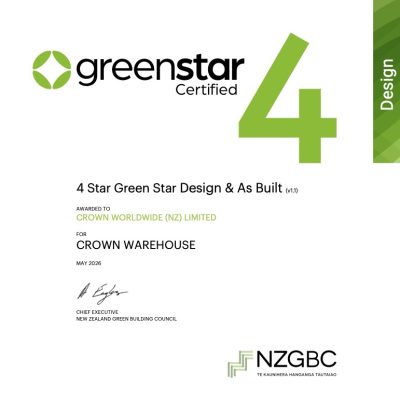
As a rigorous New Zealand certification for sustainable design and build, Green Star requirements contribute to the safety and wellbeing of those who use the building everyday. One of the specific Green Star requirements for buildings is around light quality which impacts visual comfort. For Crown’s new warehouse offices, Ashton Mitchel designed specialised glazing to help reduce glare as well as specifying a specific blind selection to protect staff from eye strain and making their work environment safer.
Maintaining Safety Throughout Construction
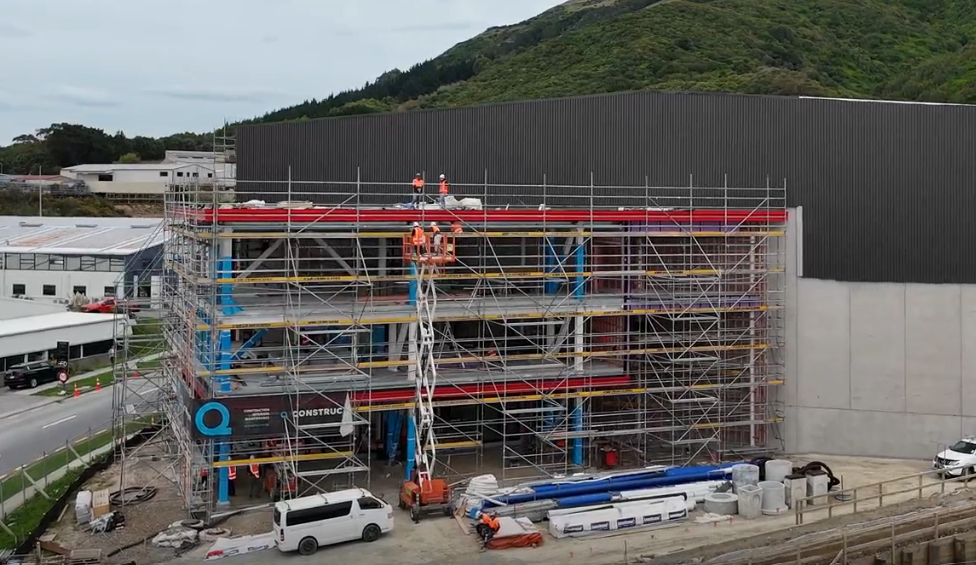
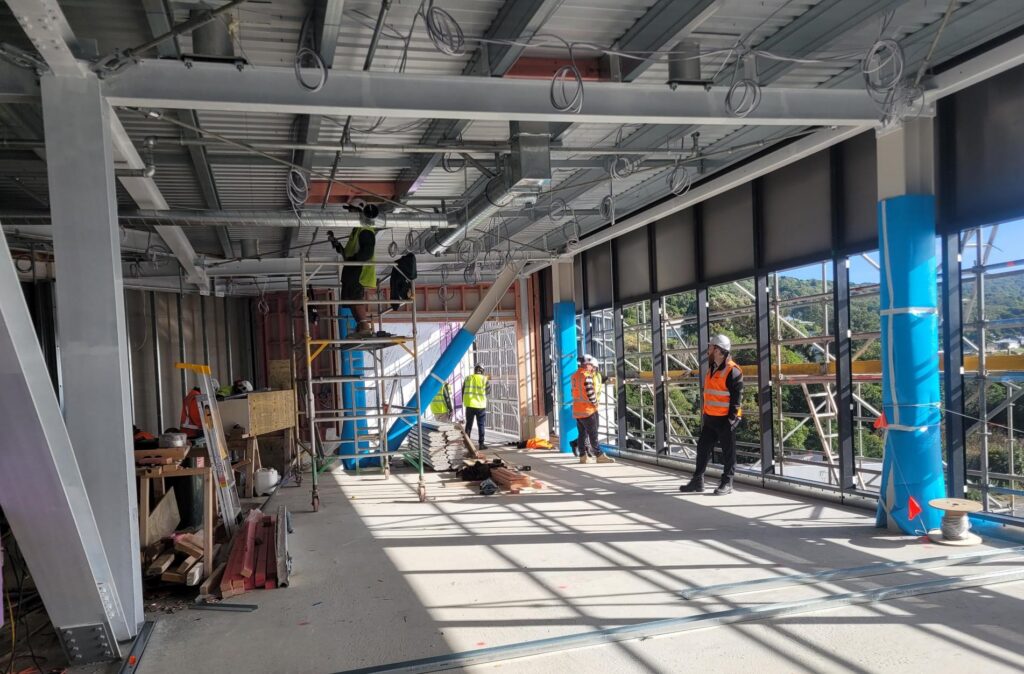
During the building phase, safety is key for Q Construction workers, visiting Crown staff, and the surrounding businesses and community.
For Q Construction, managing safety and risk starts with onsite tasks being carefully thought through prior to starting, looking at what needs to be done and how each part of the task will be completed. During this process, decisions about PPE (personal protective equipment) are made according to what the task requires, including use of EWP’s (elevated work platforms), safety harnesses, cranes, and other equipment.
With the building now in place on the site, Shane from Q Construction notes that “the limited space onsite means timing of deliveries is crucial to allow flow and continuity of tasks, as most of the clear areas are now access roads”. Traffic management plans are in place for tasks that impact roads and footpaths, including traffic control and road closures when required. Making sure vehicle movements and deliveries are safely managed requires critical timing and planning.
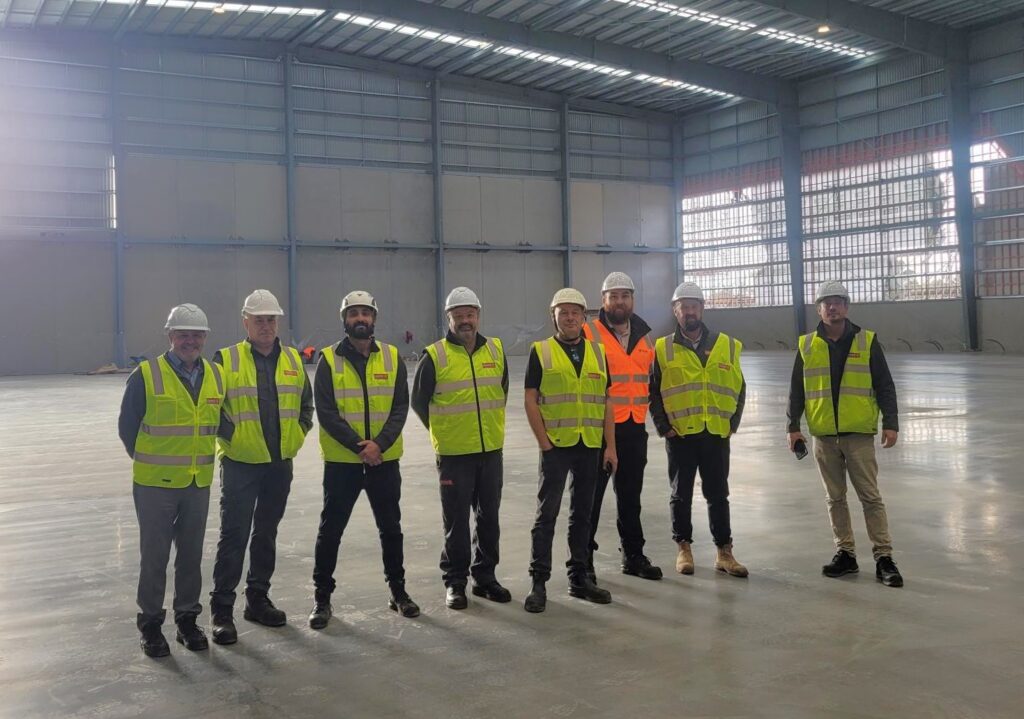
Safety matters when visiting a construction site. So when Crown personnel recently visited during construction, they needed to enter through a visitor-specific entry which directed them the site office. There, they were met by the site managers who made sure everyone was signed in and had on the correct PPE, before being escorted to various locations onsite. Once the visit was over, everyone signs out again. This ensures site managers know exactly who is onsite at any given time and all authorised personnel and visitors are safely accounted for.
Managing safety during construction of a large warehouse like Crown’s also extends to the surrounding community, which is a mix of businesses and residential homes. Construction sites can generate large amounts of dust. When the dust gets too dry to pick up, this is managed by water carts wetting the site down to protect both the workers and surrounding neighbourhood. Construction noise is limited to the hours as specified in the project consents and local residents are given advance notice via mail drop before any especially noisy work is undertaken.
There are a number of specific features which also ensure ongoing safety once the building is opened later this year. Along with a separate zone for moving truck access, a 374,000-litre underground water tank for quick access to water provides robust fire protection, as well as safety lines and harness points in the roof to provide safe access for ongoing maintenance of gutters and equipment.
From the initial design through to construction, and the finished building in the future, safety has been an integral part of every stage of Crown’s new Porirua facility. Every element, including higher structural resilience, wind protection, and visitor safety onsite has been designed with long-term protection in mind. That’s the kind of thinking that goes into a facility designed and built to protect what matters most to our customers.
What’s Next
Crown’s new warehouse is getting closer to completion each week, with the building skeleton now roofed and walls being constructed.
Join us next update to find out more about who’s moving in and Crown’s exciting future plans.